





Landlord Law Fundamentals – A Monthly Training Series
A new training webinar series for Landlord Law members, also available to non members at a modest cost.
Legal help, services and support for private residential landlords
Landlord Law Members, Course and Kit owners, please log into Landlord Law:
Landlord Law is here to:

Our main service is our Landlord Law membership service (described below).
For other products and services please see the Landlord Law shop.
Check out our
Information Centre
and
Landlord FAQ page
Sign up to our
FREE Landlord Law Essentials course
which explains the new rules in context.

Check that you are compliant with the rules and regulations which apply to the Private Rented Sector. All new members should do an audit as soon as they join. You should then carry out an audit annually.
But why not take a look and see for yourself? View the first section here.

Use our five checklists (with different versions for England and Wales) to guide you through the process of setting up and managing a tenancy – from preparing the property for letting to dealing with end-of-tenancy issues.
Checklists link out to the extensive content on Landlord Law, including our FAQ, articles, step-by-step guides and our Property Inspection and Changing Tenants kits. There is also a detailed eviction guide.

All the documents you need for managing your property – such as tenancy agreements (or occupation contracts for Welsh members), pet permission forms, guarantee forms, notices (including possession notices), draft letters, meter readings and rent arrears forms.
Our tenancy agreements are particularly popular!

It is essential that landlords keep up to date with the law. As a member, you get monthly training webinars with Tessa, other solicitors, barristers and other experts. Recordings are made available to view later (Business Level members only).
Business Level members also have access to recordings of some of our past workshops and training days, and our CPD service. Check out the training on offer.

If you have a problem which is not covered by our extensive site information, you can pop a question on the forum and solicitor Tessa Shepperson will respond, normally within 24 hours.
For more complex problems members can book a (pay extra) telephone advice call with one of our panel solicitors.

All Landlord Law content has been personally drafted or approved by specialist landlord and tenant solicitor Tessa Shepperson.
See the following pages below for more information on the different services we offer:

New legislation came into force in December 2022, which is different from English law in many respects. We have detailed guidance for Welsh landlords and occupation contracts for you to use.
Note that our service ONLY covers England and Wales UK. We cannot help landlords in other countries.


Choose from 4 plans. Starting at £25/month
A slightly cheaper membership for experienced landlords who need less support.
A slightly cheaper membership for experienced landlords who need less support.
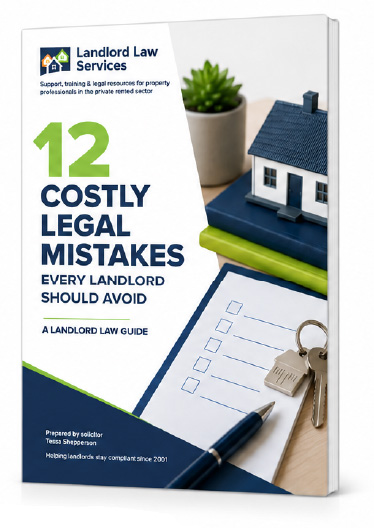

 Tessa Shepperson of Landlord Law is an accredited trainer with the
Property Investors Bureau.
Associated website: